The Legend of Lady Phi Yen
According to local lore, in the late 18th century she followed the King as he fled to Côn Đảo, seeking to escape the pursuit of opposing forces. Having suffered repeated defeats, the King planned to send Prince Hội An—widely known as Prince Cải—overseas to seek foreign military assistance.
Lady Phi Yến strongly objected to this plan. She gently counseled him:
“Battles with our own rivals are family matters. Your Highness should rely on the forces within our land. If we must call on outsiders to resolve internal affairs, then even victory would bring little honor. Worse still, it may invite future turmoil and lasting disgrace.”
Unexpectedly, these words enraged the King, who suspected her of harboring secret ties with their enemies. Had it not been for several loyal courtiers pleading for her life, Lady Phi Yến might have faced execution. Even so, the King ordered her imprisoned in a stone cave on a deserted islet southwest of the Côn Đảo archipelago—known today as Hòn Bà, or “Lady’s Islet.”
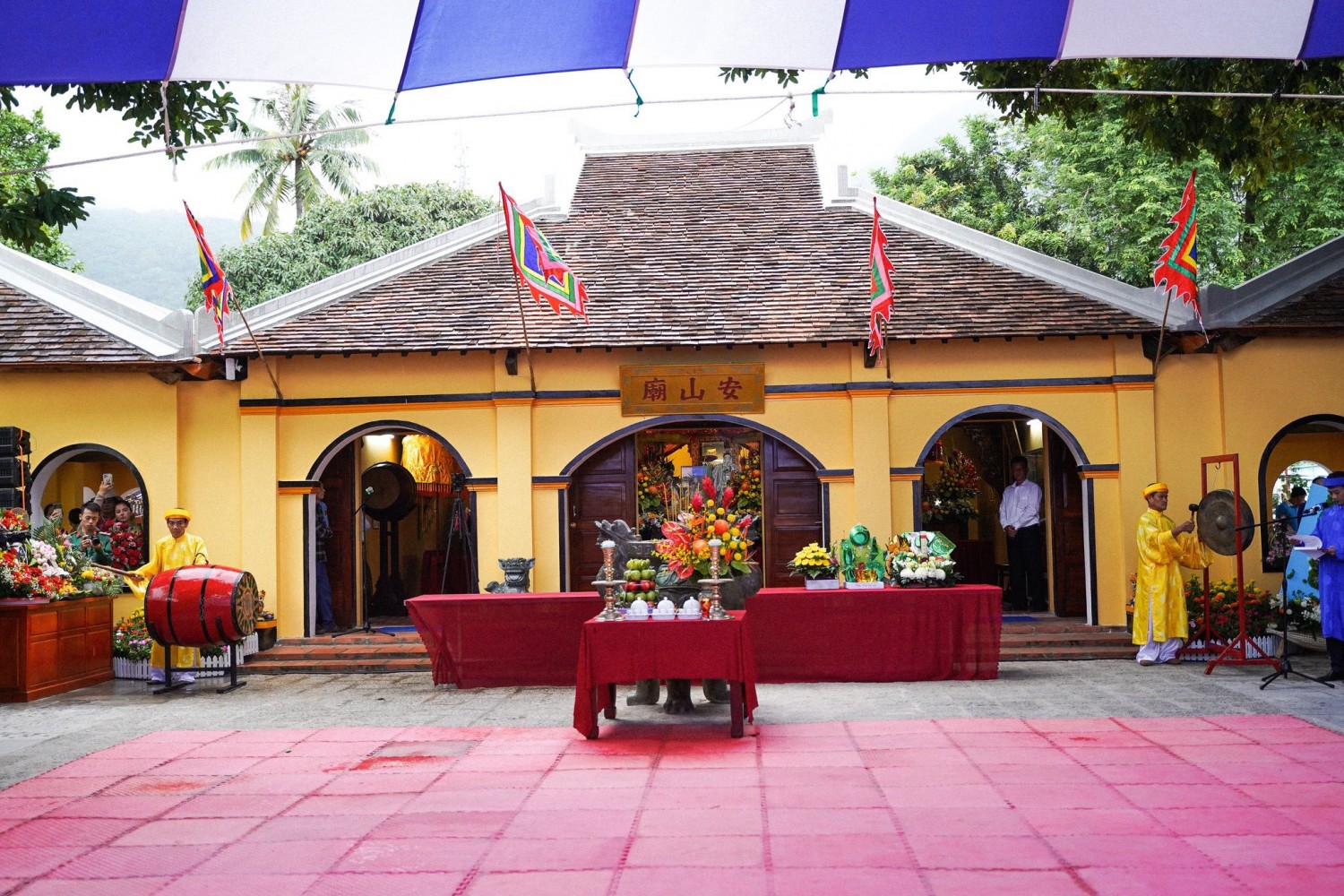
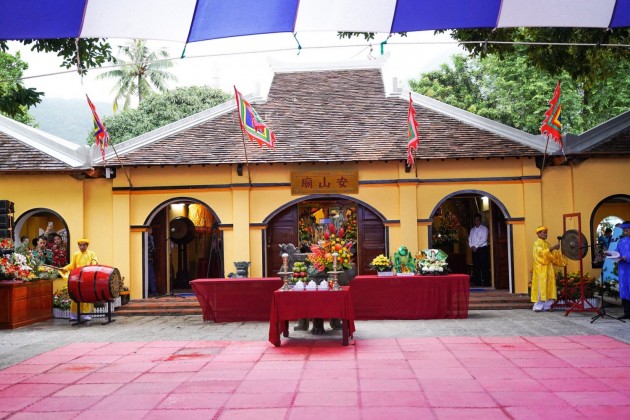
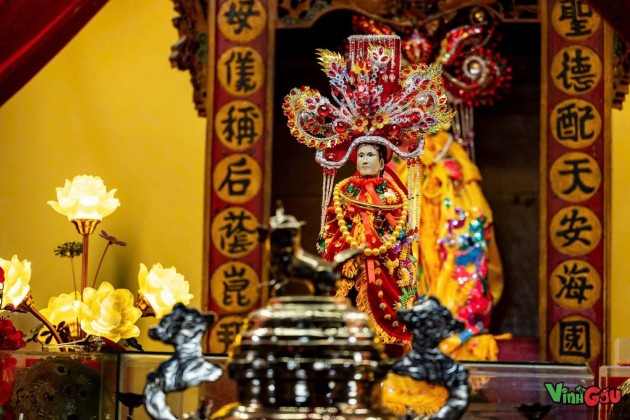
An Sơn Shrine is dedicated to Lady Phi Yến
No sooner had he issued the order than news arrived that enemy forces were approaching the island. The King and his entourage hastily boarded their vessels to sail south. Among them was Hắc Hổ, the black tiger who adored Prince Cải and followed him everywhere. As the boats prepared to depart, the young prince realized his mother was missing. Upon learning she had been imprisoned, he wept inconsolably and begged his father to bring her along. In a moment of fear and fury, the King pushed the prince into the sea, seeing it as a way to prevent future treason.
Horrified, Hắc Hổ leapt after him but could not save the child. Only when the tide receded did the tiger find the prince’s lifeless body resting upon the coral shore. With great care, Hắc Hổ carried the small body into the forest near Đầm Trầu Beach in Cỏ Ống Village and buried him there. The villagers, moved by the tiger’s devotion, gathered to raise a proper mound over the grave and built a shrine in front of it. Today, the tomb and shrine of Prince Hội An—known locally as Miếu Cậu or Thiếu Gia Miếu—still stand in Cỏ Ống.
After burying the prince, the tiger retreated to the mountains at night to hunt, returning by day to lie beside the grave and cry in grief. One day—whether by chance or through some mystical force—Hắc Hổ encountered a white gibbon. Though it could not speak, the gibbon signaled for the tiger to follow, guiding it across the island to the cave where Lady Phi Yến was imprisoned. The two animals urged her to come with them. Weak but determined, she climbed onto the tiger’s back. After hours traversing streams and mountain passes, they arrived at the edge of Cỏ Ống Forest. There, in front of the prince’s grave, the animals finally stopped. Villagers gathered and told her the heartbreaking truth. In compassion, they built a small house beside the tomb so she could care for her son’s resting place.
During her time in Co Ong, Lady Phi Yen composed a poem—an outpouring of sorrow and steadfast dignity:
“A vow of incense offered to my Lord,
Advice misunderstood as treachery.
A throne once claimed but barely secured,
Its stain shall last a thousand years.
Blood spills, a mother’s heart breaks,
Brother devours brother to sate one man’s will.
Rivers mourn, mountains grieve, flowers blur with tears—
I weep for my child, and now for my husband.”
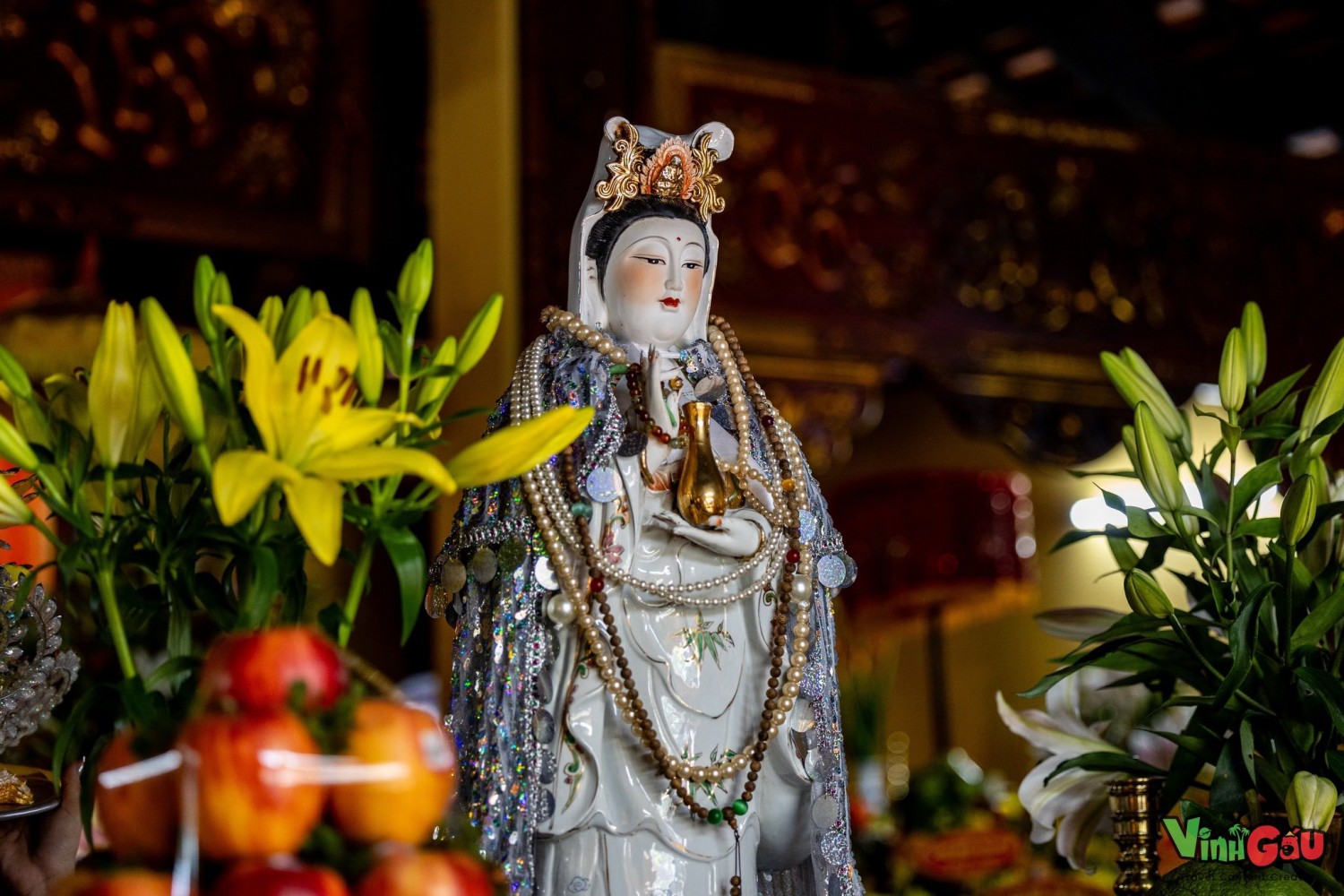
In the mid-autumn of 1785, on the 15th day of the 10th lunar month, the villagers of An Hai prepared a major purification ritual. Hoping to lend the ceremony greater solemnity, they sent a delegation to invite Lady Phi Yến to attend. Yet that very night, Biện Thi—the village butcher—sought to violate her. As soon as he touched her arm, she awoke and cried for help. The villagers apprehended him, but the shame was unbearable for Lady Phi Yến.
Though long estranged from the King, she had always preserved her virtue. To cleanse what she believed had been tainted, she severed the sullied arm herself. Still overwhelmed by grief and humiliation, she took her own life that night, choosing death to protect her honor.
More than two centuries have passed, yet the sorrow lingers:
“The earth buries deep her silent anguish,
The heavens bear witness to her tragedy.
We honor the woman who risked all for integrity,
And condemn the dark hearts that led her to ruin.”
Perhaps from such heartbreak and compassion, the people passed down a poignant folk verse:
“Gió đưa cây cải về trời,
Rau răm ở lại chịu đời đắng cay.”
(“The wind lifts the mustard greens to the sky,
Leaving the sorrowful pennywort to endure bitter fate below.”)
Every year on the 18th day of the 10th lunar month, the people of Con Dao honor Lady Phi Yen with a solemn vegetarian feast—recalling that it was during a purification ceremony that she lost her life.
The story of Lady Phi Yến, carried through more than two centuries, has become deeply rooted in the soul of Côn Đảo. It stands today as a treasured cultural tradition, embodying profound historical and humanistic values. For this reason, on April 18th, 2007, An Sơn Shrine was officially recognized as a provincial cultural and historical site. On October 28, 2022, the Ministry of Culture, Sports and Tourism issued Decision No. 2705/QĐ-BVHTTDL, officially recognizing the “Traditional Festival – Lady Phi Yến’s Commemoration” in Con Dao District, Ba Ria - Vung Tau Province (now as Con Dao Special Zone, Ho Chi Minh City) as a National Intangible Cultural Heritage.
Author: HHN
Newer articles
Older articles